
Conducting

The Conductor’s Circle of Influence

circlesI have a lot of conversations with choir directors, and one of the things I’ve noticed is that there is a strong correlation between how happy or unhappy the director is with progress and how much they refer to the choir as ‘we’ or ‘they’. Choral leaders face myriad potential difficulties: do the singers turn up regularly and on time?; do they retain what they’ve learned one week to the next?; do they pay attention during rehearsal?; do they watch the conductor?

Every choir faces variants of these challenges at their own particular level. But directors seem to feel more frustrated about them if they are framing them as problems with the behaviour of the (implicitly errant) singers rather than problems with the culture of the choir as a whole, including the director.

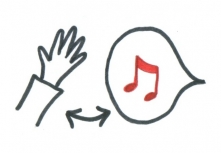
On the Interpretation of Gesture

gesture_voice.JPG
I recently had the pleasure of reading a very interesting dissertation about gender and choral conducting by Michelle Sampson, a recent graduate from Roehampton University. I’m not going to comment just yet on her primary findings since there are plans afoot to publish the study and I don’t want to steal her thunder, but she has given me permission to write about a specific observation that I found particularly fascinating.

Part of the research process involved asking both singers and conductors to comment on video footage of conductors in action (in rehearsal and/or performance). This is what Michelle noted about this process:

On Presence

I recently received an email from Dr Carl Smith, a choral director based in El Paso, discussing among other things ideas from the book Authentic Happiness by Martin Seligman. In particular, he was interested in the idea of ‘savoring’, and how that might intersect with the conductorly notion of charisma. He said:

To Seligman, "savoring" is is "...the awareness of pleasure and of the deliberate conscious attention to the experience of pleasure." Perhaps another way to describe the term is "being in the moment."

I have very recently learned (and am STILL learning!) to focus on what is happening right in front of me NOW and enoying the pleasure. In choral rehearsal at with the small church choir I conduct, it means to listen intently with a smile and with positive feedback to myself and the singers. IS THAT A PART OF "CHARISMA?"

My immediate response was: good question.

Conducting and Common Sense

Greg Beardsell presenting on conductingGreg Beardsell presenting on conductingAt the National Youth Choir’s Young Leaders event the other week, Associate Musical Director Greg Beardsell got some interesting debates going during his session on conducting. He asked participants to position themselves on a continuum between agreement and disagreement on questions such as:

  • Conducting is a skill that can be practised
  • In the UK, choral directors tend to have a lower status than orchestral conductors
  • Conducting is largely a matter of common sense

Do I Have to Use Beat Patterns?

four-pattern
One of the areas of choral directing in which there is the greatest disparity between text-book ideas of good practice and what happens in real life is in the use of beat patterns. The orthodoxy is that they provide the correct method for conducting a choir, and they provide the foundation of most approaches to teaching the craft, yet the literature remains full of rude comments about the technique of choir leaders who depart from them – real conductors, it seems, are quite happy to ignore the othodoxy.

As in most well-entrenched debates, each position has its virtues, and real life tends to involve finding a way to sail a coherent course between the polarised points.

New Workshops

If you came here via the front page, you may have observed a notice announcing a set of new themed workshops I’ll be offering from the New Year. More details can be found on the menu to the left, under the ‘helping performers’ label. I’ll still be available to do bespoke coaching of course, but I’ve developed the new offerings as a way to help ensembles become more strategic in how they plan their skills development.

The Conductor’s Identity

Something that I’ve explored in both my books is the idea of musical identity: how it is that you acquire the label (and the way of being) of cellist, or soprano, or barbershopper. I drew on the ideas of people like Anthony Giddens and Judith Butler to show how people acquire and maintain musical identities through a combination of patterns of behaviour and personal narratives. These internal autobiographies are developed through social interactions and draw on the cultural discourses that configure those identity types in wider culture.

Does a Choral Director Have to be Able to Sing?

The choirmaster must be, first and foremost, a singer… His ideal should be to draw out from the choir the sort of sound he would like to make if only he could sing all the parts at once (Gordon Reynolds, The Choirmaster in Action, 1972).

All that is necessary is an expressive, well-controlled voice, a kind of common denominator of amateur singing raised to the nth power, with which he is enabled to demonstrate to the chorus what he expects from them in return (Archibald Davison, Choral Conducting, 1954).


Opinions differ to the extent to which a choral conductor needs to have a good voice, though there is a general common-ground of consensus in favour of a reasonable competence.

...found this helpful?

I provide this content free of charge, because I like to be helpful. If you have found it useful, you may wish to make a donation to the causes I support to say thank you.


Archive by date

Syndicate content Syndicate content