Musical Identity

Thoughts on Music Theory’s White Frame: the Background

The world of music scholarship has been unusually eventful over the summer of 2020, in particular North American Music Theory, but waves felt more generally as well. Readers not in touch with academic music may have seen some if it spilling over into more mainstream media, often in rather inflammatory and misleading ways, but if you haven’t, I’ll start with a quick account of what’s happened for context.

Then I’ll get my teeth into the interesting ideas that are the actual reason I want to write about this, not all the kerfuffle surrounding them. Still, if it weren’t for the kerfuffle I don’t know that I’d have come across the good stuff, so it has served a purpose.

So, the background. At the Society for Music Theory’s annual conference in 2019, Prof Philip Ewell presented a plenary paper entitled ‘Music Theory and the White Racial Frame’, which has subsequently been published in a more developed form by Music Theory Online. He has also worked through some of the key ideas with less of a specific focus on one form of analysis in a series of blog posts, which are probably more user friendly for readers not directly familiar with Schenkerian analysis.

The Myth of the Power of Singing: Part 5

The first four posts in this series were based on a critique of the Myth of the Power of Singing I presented as part of my paper for a Choral Studies Research Day in Dublin last November. This final post moves beyond that material to consider some of the ramifications for choral practitioners ourselves, and at this time.

Choral Exceptionalism.

If ever we wanted confirmation that the Myth of the Power of Singing isn’t *just* a myth, the era of Covid-19 has provided it. Deprived of our regular fix of raising our voices with our friends, choral singers across the world are pining and grieving, fiercely missing the comfort and connection of the feel of that corporate sound around us. We didn’t imagine the joy – just look at the gaping hole it left when taken away from us.

But to confirm that singing in groups has powerful effects on participants is not the same as to say it is unique in its capacity to uplift. Singing may be wonderful, but that does not necessarily mean that it is special.

The Myth of the Power of Singing: Part 4

The previous two posts in this series examined, respectively, the problems in using pseudoscience to promote singing, and the negative aspects of choral culture that the Myth of the power of Singing serves to hide. This post examines the issues the Myth presents for the scholar-practioner, creating a structural conflict between the two halves of the role.

The scholar-practitioner’s dilemma

The scholar-practitioner arguably always has a tricky line to tread. As a scholar they are committed to ideals of objectivity and transparency; as a practitioner they clearly have skin in the game. The prevailing narrative that singing is always and inherently a Good Thing amplifies this conflict of interest by eliding the distinction between practice and advocacy for that practice. The result is a tendency to build mythological assumptions into research design.

The Myth of the Power of Singing: Part 3

The first two instalments of this series introduced the Myth of the Power of Singing, and examined how choral culture routinely undermines its claims by uncritical appeals to pseudoscience. This post turns to the narratives themselves, to note that whilst participants would on the whole confirm their claims, they don’t tell the whole story. The second reason we should think more critically about the narrative of the Power of Singing is that the very existence of this mythology invites one to ask: what is it hiding?

The Skeleton in the Closet

I have turned in a number of contexts over the years to the sociology of new religious movements to analyse various choral cultures – first barbershop, more recently Rock Choir and the Natural Voice Network – but in fact many of the social practices evident in these ‘fringe’ choral movements pervade the mainstream as well.

The Myth of the Power of Singing: Part 2

In the first instalment of this series I highlighted the positive narratives that surround music-making in general and choral singing in particular, and argued that, whilst they undoubtedly feel experientially valid to those who share them, they would benefit from some critical examination. In this post, I start this critique by considering how choral practitioners’ relationship with science often lets enthusiasm run ahead of intelligence.

Singing and Pseudoscience

We know from our own lived experience that singing contributes to our wellbeing, and we like to share that experience. All too often, though, we promulgate nonsense in service of our cause. The self-help/self-improvement industry produces a regular stream of feel-good articles that mix up cherry-picked morsels from empirical studies with earnest encouragement from creative practitioners into a pseudoscientific concoction that vividly exemplifies the genre of literature that has memorably been termed ‘Neurobollocks’ in the blog of that name.

The Myth of the Power of Singing: An Essay in 5 Parts

This is the first instalment of a series of blog posts that turns a self-critical eye on the stories choral practitioners tell to ourselves about ourselves and what we do. It is based on the paper I was invited to present at Dublin City University’s Choral Research Study Day back in November 2019, of which it formed a subsidiary part of a wider discussion around how the scholar-practitioner copes with the inherent contradictions between their roles as impartial observer and as advocate.

I have wondered whether it is entirely kind to publish it at a time when choral practitioners are keenly feeling the loss of both the social and musical nourishment our regular activity would bring us. But then again perhaps now is an appropriate time for reflection; maybe we’ll have more perspective on our work at a time when we can’t actively engage in it. And at a pragmatic level: this is something I’ve been thinking about blogging about for years but now is the first time I’ve had enough of a hiatus in the other things I’d normally be writing about to make space for it. (And indeed I may interrupt the series with other things as they come up.)

Ah well, here goes.

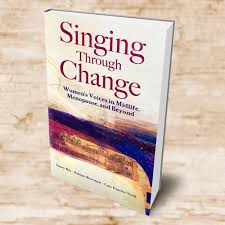
Book Review: Singing Through Change

singingthroughchangeTl;dr: this is a useful book, and you should read it.

Singing Through Change: Women’s Voices in Midlife, Menopause, and Beyond is, as you would imagine, relevant to the vast majority of people involved in singing. If you are a man who never makes music with adult women it may not touch on your activities very much (though you may well have female friends and relatives who would be happy for the men in their life to have some insight into their experiences), but for everyone else there will be direct relevance either for yourself, for the women you make music with, or both.

Soapbox: Allocating Parts for Emotional Damage

soapboxIn SATB music, it’s relatively easy figure out which part people should sing if they don’t already know. The texture is built around a divide by sex, with a split between higher and lower voices in each. So you just see what kind of range someone has, and slot them in where the notes they have and the notes the music needs coincide. Some people (counter-tenors, female tenors) defy the first part, but the stratification by range still works, so the model as a whole presents safe a generalisation of how to go about things.

One of the defining characteristics of barbershop music is that the parts are all much less differentiated by range (there’s a clue in the description ‘close-harmony’). Thus, most people can readily sing at least two of the parts, usually three, sometimes all four. You’d think this would take some of the pressure off the decision-making process of part-allocation, but in fact it seems more often to intensify the reliance on social stereotyping in identifying parts.

...found this helpful?

I provide this content free of charge, because I like to be helpful. If you have found it useful, you may wish to make a donation to the causes I support to say thank you.


Archive by date

Syndicate content Syndicate content